DOCUMENT MANAGEMENT MIGRATION

How to migrate from a legacy document management system

Traditional document management migrations take too long, cost too much, and leave the same problems behind. Vertesia's AI-powered process migrates your documents intelligently, enriches them along the way, and provides the AI capabilities your teams actually need post-migration.

IT and Engineering 5
WHY MIGRATIONS FAIL

Why traditional document management migrations fail

Most document management migrations follow the same painful pattern: export everything, map old fields to new fields, import the documents, and hope the metadata survives. The result is a "new" platform with the same old problems.

time-icon
Traditional migrations take 12+ months

Large document management migrations routinely take 12-18 months to complete while users are stuck using the outdated systems.
increase-cost
Migrations are high cost and high risk

Traditional migrations are expensive, and carry significant risk of data loss, metadata corruption, and business disruption. Many projects go over budget and miss deadlines by years.
failure
The lift-and-shift approach is flawed

Migrating documents "as is" results in incomplete metadata, duplicate files, and inconsistent classification. The result: a new system with many of the same old problems.
no-ai-model-management
No intelligence added during migration

Traditional migration tools simply move documents from one place to another without understanding what the document means, who it belongs to, or how it should be classified.
WHY VERTESIA

What makes a migration to Vertesia different?

AI is a game changer, enabling Vertesia to replace legacy systems 4x faster and at a fraction of the cost of traditional approaches while enabling agentic capabilities immediately post-migration.

progress
AI-powered document enrichment during migration

As your documents move from the legacy system to Vertesia, our document intelligence engine reads every document. It automatically extracts key metadata, classifies documents, identifies duplicates, and flags documents for retention review.
learning-icon
Semantic understanding, not just field mapping

Legacy migrations rely on rigid field mapping. Vertesia understands what your documents mean at a deeper level and applies the right metadata, even when naming conventions differ across departments or legacy systems. Fields do not have to match exactly. The meaning does.
migration
Phased migration without business disruption

Vertesia supports migration by department, content type, or business unit. Teams do not have to wait for a big-bang cutover. They can access new AI capabilities while documents continue migrating in the background.
governance
Governance built-in from day one

Every document that enters Vertesia is immediately governed. Permissions, retention schedules, access controls, and audit trails are applied automatically as each document arrives. You do not configure governance after migration. It is part of the migration process.
decrease-time
Dramatically shorter project timelines

Because Vertesia automates the most time-consuming parts of migration (metadata enrichment, document classification, de-duplication, quality assurance, workflow recreation, etc.) enterprise migrations that used to take years are now completed in months.
integration
Seamless integrations

Vertesia connects directly to the platforms your teams already use, including Microsoft 365, Salesforce, and leading AI frameworks. Migrated documents become immediately available for search, automation, and agentic workflows without additional configuration.
What happens after you migrate to Vertesia?

You get the full power of Vertesia's AI-native platform which offers a durable content and process engine, AI-powered intelligent document preparation and processing, agent orchestration, and an AI-native workspace where you can easily recreate your existing workflows, create new agentic workflows, and deploy purpose-built AI applications and agents.

AI-POWERED DOCUMENT MANAGEMENT MIGRATION

How Vertesia's document management migration process works

Vertesia uses an AI-powered migration process that is structured and repeatable. It was built for very large enterprise document management environments and regulated industries.

STEP 1
Document discovery and analysis

We start by analyzing your existing document management systems. The platform scans your legacy systems, maps the document types, identifies the metadata schema, and flags documents that are redundant, outdated, or trivial. You get a clear picture of what you have before anything moves.

STEP 2
Migration planning and configuration

Based on the discovery results, we configure the migration pipeline. This includes defining document type mappings, setting up enrichment rules, applying retention policies, and building the governance model that will apply to all migrated documents.

STEP 3
Intelligent migration with AI enrichment

Documents move from your legacy systems to Vertesia in managed batches. During transit, AI applies metadata, classifies documents, and flags items that need review. Automated quality checks run after each batch so you can verify accuracy.

STEP 4
Go-live with agentic AI capabilities

Once migration is complete and validated, your teams move to Vertesia. Legacy system access stays read-only until you are confident everything is in place. Then you decommission the old system cleanly.

INTEGRATION LAYER

API compatibility layer

Vertesia's API compatibility layer mirrors the interface of your legacy system, allowing existing applications, scripts, and third-party tools to continue operating without modification. Teams can cut over to Vertesia on their own schedule with confidence that nothing upstream will break.

api-endpoints

Drop-in endpoint replication

Vertesia exposes REST endpoints that match the path structure, request parameters, and response schemas of your API, so connected systems immediately recognize the new platform as a like-for-like replacement.
integration-puzzle-pieces

Zero-change integrations

Business applications, RPA bots, and reporting pipelines that previously called the legacy API continue to function without code changes, configuration updates, or re-testing. This eliminates a major source of migration risk and cost.
transition

Incremental cutover support

The compatibility layer can run in parallel with the legacy system during the transition period, routing traffic to either backend. This allows teams to migrate documents and validate behavior progressively rather than committing to a single hard cutover.
path

Transparent upgrade path

Once all integrations are stable on Vertesia, teams can adopt native Vertesia APIs at their own pace to unlock advanced capabilities without being forced into a disruptive "rip and replace" migration.
BINARY MANAGEMENT

Migrate binaries "in place"

Your existing binaries/objects (PDFs, images, videos, etc.) can remain in their current storage location including Google Cloud Storage, Amazon S3, and Microsoft Azure Blob Storage. No need to transfer terabytes of data or extract documents through a restrictive API. The original files remain untouched and accessible, you avoid storage duplication during migration, and we can leverage existing cloud or on-premises storage investments.

Google Cloud Storage
Amazon S3
Azure Blob Storage
DATA-LAYER ACCESS

Direct data-layer migration

Instead of going through APIs, Vertesia accesses the underlying database directly. Schema-aware extraction reads from the source data layer. Access control lists and metadata move directly. No manual re-entry required.

schema

Read metadata schemas without manual remapping
ingestion

Transfer millions of documents in parallel
versioning-icon

Preserve version histories and audit trails
data-automation

Maintain permissions and access controls
SECURE

Enterprise-grade security throughout the migration

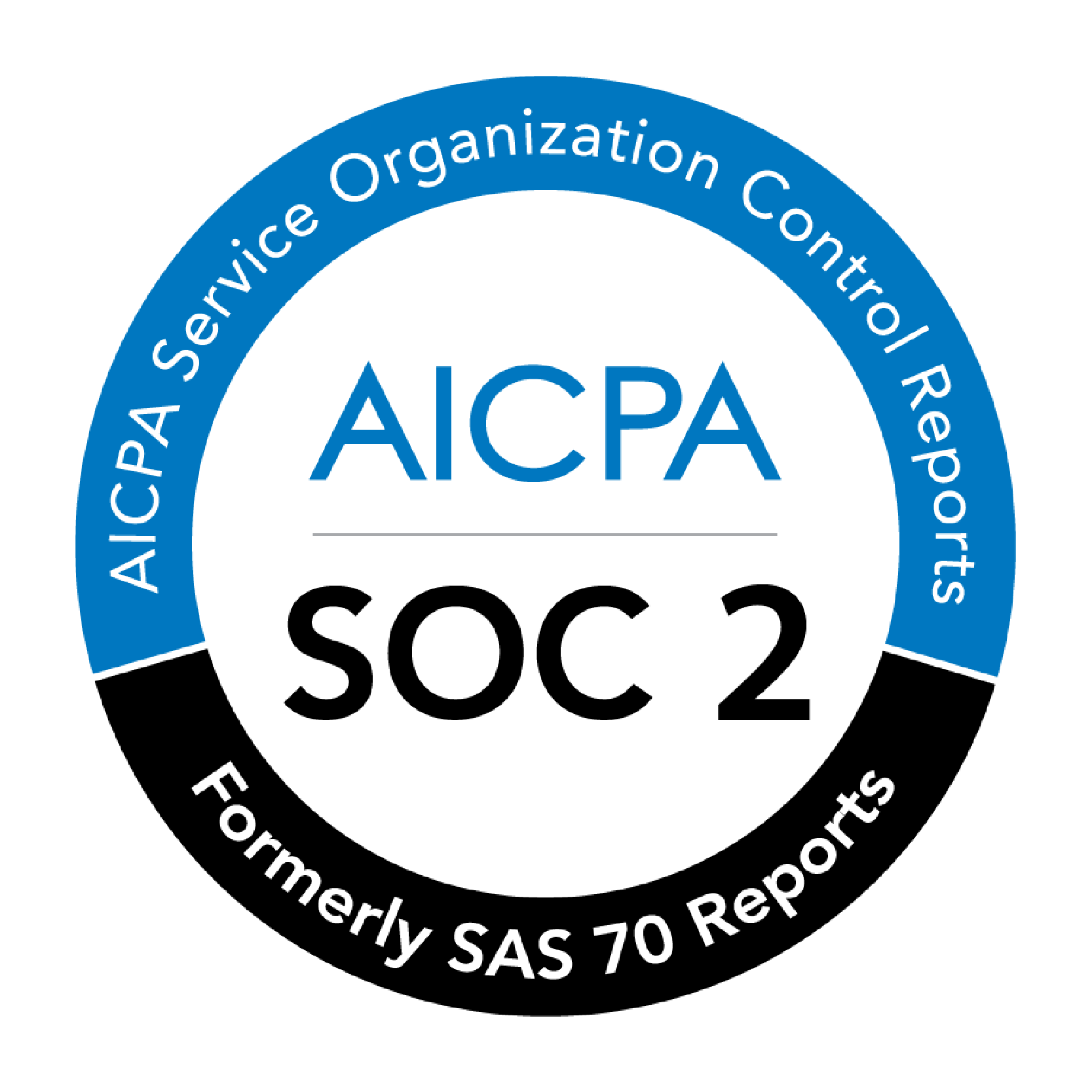
Vertesia is SOC 2 Type II certified and supports HIPAA, GDPR, and CCPA requirements. Data is encrypted in transit and at rest. Your documents never leave your control, and they are never used to train public AI models.

THE BUSINESS CASE

The ROI of migrating to Vertesia

Customers who migrate their legacy document management systems to the Vertesia platform see a significant ROI in less than 12 months. Vertesia's AI-native platform scales dynamically with your business and your AI ambitions.

reduce-costs
Lower total cost of ownership

Vertesia customers see a 50-60% cost reduction on annual subscriptions, licenses, and infrastructure.
fast-time
Faster time to value

Phased migration means teams start using Vertesia's AI-native capabilities immediately, not at the end of a multi-year project.
decrease-risk
Reduced compliance risk

Built-in governance, retention management, and audit trails reduce the risk of regulatory violations from day one. Every action is logged. Every change is tracked.
AI-atoms
AI-ready documents

Every document that moves into Vertesia is ready for AI agents, search, and automation. No additional preparation is required after migration.

WHITE PAPER

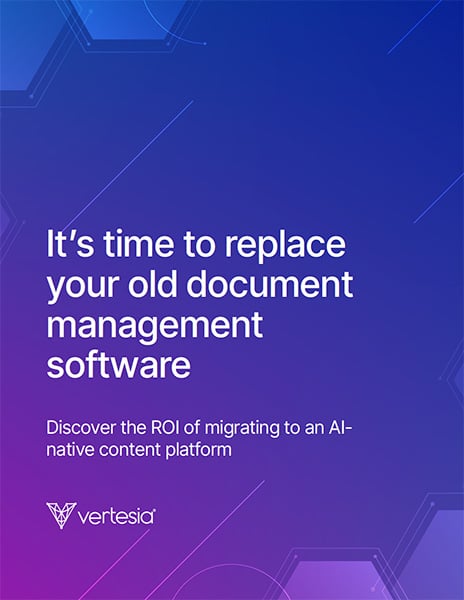
The ROI of replacing your old document management software

This white paper reveals how forward-thinking organizations are quickly migrating their legacy document management systems to an AI-native content platform to save 50-60% on annual subscriptions and infrastructure costs.
FAQ

Frequently asked questions about AI-powered document management migration

Is Vertesia a document management migration tool?

No, Vertesia is not a dedicated migration tool. It is an AI-native content platform that is exceptionally good at modernizing your document management tech stack while migration happens.

Which document management software can I migrate to Vertesia?

Vertesia can migrate documents from any document management system, including:

  • Hyland products (Nuxeo, Alfresco, OnBase, Perceptive)
  • OpenText (OpenText Content Suite and Documentum)
  • IBM (FileNet and IBM Content Manager)
  • Microsoft SharePoint
  • Laserfiche
  • M-Files
  • Doxis (formerly SER Group)
How fast can Vertesia migrate documents?

Documents are transferred in parallel streams, not sequentially. Dynamic scaling enables ingestion of 100+ million documents per day and the cloud-native architecture eliminates infrastructure bottlenecks.

What makes Vertesia's migration process faster than others?

Your binaries don't need to move. We simply connect to your existing Cloud storage layer. We also can access your database directly, not through restrictive APIs. This means 100x faster metadata migration, no manual property remapping, and near-real-time sync during testing.

What happens to my existing document workflows during and after migration?

Your workflows are in safe hands. The Vertesia process engine can recreate your existing workflows simply from natural language descriptions or from a diagram of your current process. No complex manual configuration required.

Before any workflow goes live, a dedicated AI agent performs full end-to-end testing and surfaces recommendations for improvement, so you can migrate with confidence and hit the ground running with an optimized process rather than a basic like-for-like replica.

Once deployed, your workflows can be placed under continuous monitoring. This proactively identifies bottlenecks, reduces cycle times, and keeps your processes performing at their best without requiring constant manual oversight.

Do I need to rebuild my APIs after migrating to Vertesia?

Vertesia can replicate your legacy system’s API, eliminating complex reintegrations. Existing integrations continue functioning while the underlying platform changes which means less disruption during the switch.